Harmonized Resilience at Roosevelt Village: A zero-emissions model for supportive housing

Association for Energy Affordability
Recipient
Emeryville, CA
Recipient Location
7th
Senate District
18th
Assembly District
$828,373
Amount Spent
Active
Project Status
Project Update
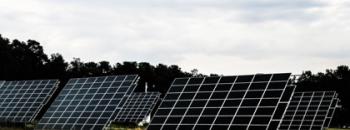
This project ended in June of 2025. The project focused on developing a scalable zero-carbon design for Roosevelt Village, an eight-story affordable housing development in San Jose, California. The design aimed to achieve grid resilience and cost efficiency by integrating advanced technologies such as distributed energy resources, battery and thermal storage, and solar generation. It would enable the building to island from the grid during peak hours and maintain essential functions during outages while safeguarding resident health and autonomy. The research will optimize structural systems, energy efficiency measures, and load management strategies to reduce emissions and costs, and will produce standardized design templates for broader adoption in mid-rise multifamily housing. The project also emphasized stakeholder engagement, market transformation, and knowledge transfer to accelerate the transition to all-electric, grid-interactive housing solutions.
The Issue
California lacks resilient and grid-responsive design in affordable multifamily housing, which leaves vulnerable populations exposed to risks during power outages and climate-related hazards. Current affordable housing finance structures do not incentivize resilience, and developers face cost barriers and technical uncertainty when integrating distributed energy resources. Conventional approaches often oversize batteries for rare outage scenarios, making solutions economically impractical. Additionally, there is limited understanding of how to combine energy efficiency, load shifting, and on-site generation to meet grid decarbonization goals while maintaining affordability and resident comfort.
Project Innovation
The project introduces an innovative design framework for affordable mid-rise housing that combines grid interactivity, resilience, and carbon reduction in a cost-effective and replicable way. Its core innovation lies in harmonizing multiple strategies: advanced energy efficiency, thermal storage, dynamic load management, and distributed energy resources before sizing battery storage, which dramatically reduces costs compared to conventional approaches. By right-sizing a centralized solar-plus-storage microgrid and integrating domestic hot water load shifting, the design achieves 94% curtailment of peak energy use and sustains critical apartment-level functions during outages with only 2.6 kilowatt-hours of battery capacity per unit. This integrated approach sets a new standard for resilience and affordability, while leveraging proven technologies and simple controls to minimize complexity for non-profit operators and residents.
Project Goals
Project Benefits
The project and final design showcase benefits for both residents and the broader energy system. It provides reliable backup power for critical apartment-level and common area functions during outages, enhancing safety and comfort for vulnerable populations. The replicable design framework promotes market transformation, enabling widespread adoption of resilient, grid-interactive, affordable housing solutions.

Reliability
The design developed for this project proves that it curtails peak energy demand and integrates distributed energy resources to support grid stability and decarbonization goals.

Affordability
Creates a scalable model for affordable housing that aligns resilience and carbon reduction with financial feasibility, enabling broader market adoption and reducing planning costs of future designs.