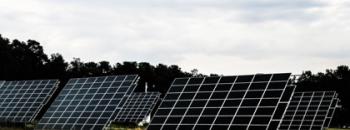
Essential Power Support for the Kaiser Permanente Ontario Medical Center using Long Duration Batteries within a Renewable Energy Microgrid

Charge Bliss, Inc.
Recipient
Irvine, CA
Recipient Location
37th
Senate District
73rd
Assembly District
$8,120,308
Amount Spent
Active
Project Status
Project Update
This project is in the last stage of completion. The site construction is complete, and the 9 MWh Eos battery system, transformers and switch gear have been installed on site. Initial "cold" testing began at the end of 2023. The receipt of conditional Permission to Operate (PTO) in 2024 allowed "hot" commissioning and testing to begin. Full PTO was granted in early 2025 as final commissioning activities began.
The Issue
Integration of long-duration energy storage into renewable energy microgrids faces several hurdles. This project will demonstrate the technical and operational viability of a long-duration energy storage (LDES) system, capturing lessons learned to inform best practices and support the broader advancement of the LDES market.
Project Innovation
The project will demonstrate a 10-hour flow battery system combined with solar PV and a microgrid controller to support the Kaiser Permanente Ontario Medical Center. This project builds on a prior project funded by the CEC’s Electric Program Investment Charge (EPIC) program, at a hospital in Richmond, CA and allows a direct performance comparison. The recipient will measure parameters such as energy production, round-trip efficiency, demand reduction, islanding frequency, island duration, and the ability to provide ancillary services. The system will be tested for the ability to serve nearly 100 percent of the hospital’s load for 12-hours or longer. The project team will further develop the microgrid controller to optimize its functions.
Project Goals
Project Benefits
Demonstrate prolonged support of critical hospital power systems using clean energy provided by renewables and energy storage instead of fossil fuel-based diesel generators.
Demonstrate the performance difference between long-duration flow batteries when compared to lithium-ion systems in terms of safety, operation and environmental factors
Demonstrate the value of a next generation microgrid controller with automated demand response (ADR) for clean energy technology capabilities when compared to the manual operation of fossil fuel diesel generation systems.

Affordability
The system will annually produce up to 4.1 GWh of clean renewable energy or 123 GWh over its lifetime. This translates to an estimated annual savings of $328,000 or $9.84 million over the lifetime of the system. Peak load reductions are estimated to provide additional financial benefits.

Environmental Sustainability
This project represents a major step toward cleaner energy systems by establishing a hospital backup configuration in which the microgrid serves as the primary backup resource, with diesel generation used only if needed.
Key Project Members

Mark Handy
Steve Gabbitas
Subrecipients

Charge Bliss Construction California, Inc. DBA Faraday Microgrids
Mazzetti, Inc.
DC Energy Services
Golden State Power, LLC
ConTech CA
Troy Brown Consulting
Nhu Energy, Inc
KPC Group
Match Partners
Charge Bliss, Inc.
Charge Bliss Construction California, Inc. DBA Faraday Microgrids
Kaiser Permanente National Facilities Services