Basset-Avocado Advanced Energy Community
The Energy Coalition
Recipient
Irvine, CA
Recipient Location
37th
Senate District
73rd
Assembly District
$6,652,748
Amount Spent
Active
Project Status
Project Update
In 2025, the Bassett and Avocado Heights Advanced Energy Community (BAAEC) team made significant progress in implementing key initiatives.
The project expanded its Advanced Homes program into a service capable of providing full single-family home electrification. The total upgrades at the end of 2025 stand at 46 solar installations, 45 homes with battery storage, and 78 home end-use electrification upgrades on 40 homes in partnership with the SCE Building Electrification pilot. In order to complete this work, the project invested in necessary home remediation: 57% (26) of participating low-income homeowners received full or partial re-roofs and 76% (35) required new electrical panels. The M&V analysis for a subset of homes showed a 35% reduction in total monthly energy costs, despite electrification measures. These are tangible affordability and quality of life improvements but were challenging to achieve – BAAEC screened hundreds of homes for eligibility.
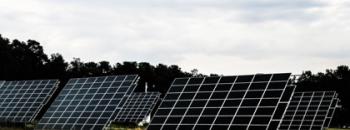
The team completed final commissioning, close-out, and reporting requirements on its Community Solar projects - the first two-site aggregation resource to enter CAISO under the Distributed Energy Resource Aggregation construct. In partnership with Clean Power Alliance (CPA), the 670 KW of rooftop solar across the two sites serves approximately 360 low-income households at a 20% discount on their electric bill.
In 2025, BAAEC closed its innovative CarShare program. Branded as SGV CarShare, the program explored pricing points and car reservation durations to find the best match for community needs. Out of the thousands of outreach touchpoints, 175 individuals signed up to indicate initial interest and 36 of those took additional steps for enrollment. Ultimately, eleven individuals enrolled in the program and received services. To support the limited EV infrastructure in the community and promote EV ownership, the project provided six participants with no-cost Level-2 home EV chargers. The chargers have the capability to be publicly accessible and offer homeowners the opportunity to earn money when neighbors charge.
The BAAEC demonstration project received an extension to June 2026, which will allow for the installation of a few pending residential upgrades. The extra time will also enable the installation of the significantly delayed 30 EV chargers across three local public schools.
In 2026, the team will focus its efforts in knowledge sharing activities. Project implementation key learnings and insights will be packaged into CEC reporting deliverables, including the Final Report, a Case Study, and a Scalability Toolkit. The team will also participate in a joint AEC Symposium on February 19, in collaboration with the three other AEC projects, to share findings and inspire critical conversations around decarbonization topics. These efforts will ensure that the project’s impact and lessons learned can inform future clean energy initiatives.
The Issue
Disadvantaged communities (DACs) suffer from a combination of economic, health, and environmental burdens and relatively few resources are utilized on retrofits and clean energy developments. Major technical and structural barriers that DACs face in their transition to a clean energy future include: high levels of renters, limited capital, technology/clean energy industry mistrust, deferred home maintenance requiring high remediation costs, and inadequate business models and financing strategies.
Project Innovation
The project will use private sites within the community to generate local, renewable, and competitively priced electricity through a community solar project. The BAAEC aims to demonstrate the benefits of solar, battery storage, and decarbonization in low-income homes. A prosumer network simulation will assess the potential of transactive energy in aligning supply and demand within the community for system-wide grid savingswhere enrolled participants generate, actively manage and sell energy. This approach tests a potential business model for converting passive bill-payers into discerning "prosumers", thereby empowering communities to benefit from their own local generation.
Project Goals
Project Benefits
A lack of capital to invest in energy solutions is a significant barrier. The BAAEC team has developed a comprehensive design that leverages private capital to develop local integrated renewable energy systems and alternative transportation opportunities. The proposed Smart Community Solar will provide participants, at least 50% of which will be low-income, with risk-free access to 100% renewable and locally produced electricity at a 20% discount over their current electricity rates through a Community Solar Green Tariff program offered by the Clean Power Alliance. The BAAEC will create new community assets that have significant long term value. Once the model is tested and proven, its approach and benefits can be replicated in DACs throughout the state.

Affordability
This project will produce energy cost savings through community scale solar and residential solar plus battery storage systems.

Reliability
This project will increase resilience during utility system power outages, natural disasters, weather events, severe heat days and other emergencies. This project will also alleviate local energy grid constraints with locally produced clean energy.
Key Project Members

Craig Perkins
Subrecipients

The Regents of the University of California on behalf of the Los Angeles Campus
Day One
Green Commuter Inc.
GRID Alternatives
Sonnen Inc.
Community Electricity
Active SGV
Space AI
SensorComm Technologies, Inc.
ACLIMA Inc.
Green Lots
Vermont Energy Investment Corporation
Swell Energy Inc.
EV Charging Solutions, Inc.
Federico Karrmann & Matias Ares
Energy Web Foundation
Pivot Energy
Swell Services Inc.
Perl Street, Inc.
Urban Us Capital, LLC
Goji Labs LLC
Winston & Strawn LLP
Match Partners
Zeco Systems, Inc. dba Greenlots
Green Commuter Inc.
GRID Alternatives
Enel X North America, Inc.
Community Electricity
Green Convergence
Space AI
SensorComm Technologies, Inc.