Use of Indoor Rearing for Head-Starting Desert Tortoises
Examining indoor rearing of juvenile tortoises to increase survival in the wild


Regents of the University of California, Davis
Recipient
Davis, CA
Recipient Location
3rd
Senate District
4th
Assembly District
$485,716
Amount Spent
Completed
Project Status
Project Result
The research team produced tortoise hatchlings in 2016 and 2017 and assigned them either to the indoor or outdoor experimental groups. The indoor group was raised indoors in their first year and then transitioned to outdoor pens for the second year of their head-starting. Incorporating an indoor-rearing component greatly reduced the time required to produce large juveniles of releasable size with no observed negative effects on either survival or post-release movement behaviors. By shortening the captivity period, indoor head-starting can dramatically reduce the costs of rearing tortoises and increase production of tortoises from head-starting facilities. These improvements facilitate wider implementation of head-starting as a recovery tool for desert tortoises. Implementing more cost-effective recovery actions such as this will aid mitigations for solar energy development and should increase the probability of delisting the desert tortoise as a special-status species in the future.
View Final ReportThe Issue
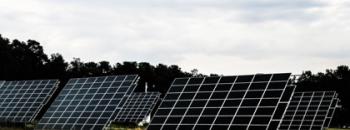
Rapid development of utility-scale solar electricity generation facilities in the desert southwest has resulted in loss of habitat for special status species, such as the Mojave Desert tortoise. Current law and implemented policies require that negative impacts to protected species be minimized or offset. Research is needed to evaluate the efficacy of head-starting as a mitigation tool for offsetting or minimizing impacts to the desert tortoise as well as aiding recovery of the species to streamline future permitting for renewable energy development.
Project Innovation
The project conducted experimental releases of juvenile desert tortoises raised since 2011-2013 and new hatchlings in 2016-2017 to evaluate the trade-offs of head-start duration on post-release survival of desert tortoises. The project team divided new hatchlings into two cohorts, raising half of them exclusively outdoors and the other half under a combination of indoor/outdoor rearing, releasing them as 2 year olds, and comparing their post-release survival. Data on the growth and survival of animals in this study provides guidance on the minimum duration of outdoor head-starting and whether indoor head-starting should be pursued in future head-starting programs for desert tortoises. Ultimately, the results of the study inform the extent to which head-starting both indoors and outdoors is a viable solution for mitigating localized impacts to tortoise populations affected by development for solar energy production facilities.
Project Benefits
The research was the first to evaluate the trade-offs in duration of head-starting on post-release survival in the eastern Mojave Desert where numerous solar production facilities have been recently constructed. Because longer head-start periods cost more, finding the optimal head-starting duration will help develop more cost-effective head-starting programs. The research also evaluated indoor-head-starting. If the increase in size also results in an increase in post-release survival compared to outdoor-reared animals, indoor head-starting could dramatically reduce the costs of rearing animals to releasable size and also increase production of head-starting facilities.

Affordability
This project will benefit ratepayer with lower costs by making head-start mitigation more cost-effective, reducing obstacles to future renewable energy deployment.

Environmental Sustainability
New scientific knowledge on minimum size required at release will improving survivorship, resource needs, and translocation practices. Implementation of more effective mitigation practices may lead to de-listing this species.
Key Project Members

Brian Todd

David Stoms
Subrecipients

University of Georgia, Research Foundation, Inc.
Match Partners
Regents of the University of California, Davis