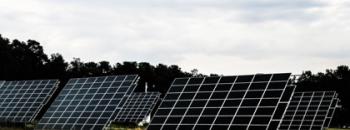
Urban Microgrids for Grid Resiliency and Disaster Readiness
Software-driven, product-centric, building block approach to cost-effective virtual microgrid network across multiple sites and IOU territories.

Gridscape Solutions, Inc.
Recipient
Fremont, CA
Recipient Location
10th
Senate District
24th
Assembly District
$3,948,157
Amount Spent
Active
Project Status
Project Update
This project involves several sites.
In the City of Fontana, construction at three sites has been completed, but a few issues encountered during commissioning have led to a pause in the final building permit phase. These issues are expected to be resolved by the second quarter of 2026.
In the City of San Diego, construction at three sites has been completed, and fire inspections are currently in process. It is anticipated that the final building permit will be received, and interconnection will be completed in the second quarter of 2026.
Finally, the construction of a microgrid at Chabot College is in progress and is expected to be completed by the third quarter of 2026.
A two-year NCTE was granted to the project in December 2025 in order to address delays and complete all project activities.
The Issue
Critical facilities such as fire stations, 911 call centers, and community service centers cannot afford to be without power, even for a short time. The aging nature of the grid and limited funding for the operations of critical facilities have made disadvantaged communities particularly vulnerable and more susceptible to outages caused by natural disasters such as wildfires and or earthquakes. Disadvantaged communities need better, resilient infrastructure such as microgrids powered by clean and renewable energy to help support critical operations. This project demonstrates how software-driven, modular microgrid network can address this need.
Project Innovation
This project is developing a software-driven, modular microgrid network for disaster-readiness, resiliency, and grid services and will deploy them at ten demonstration sites in disadvantaged communities in three IOU service territories. It will connect multiple customer-owned behind-the-meter DER assets into virtual networks of microgrids via cloud-based controls and an optimization platform. Each microgrid will be able to operate independently in a cyber secure way to reduce facility electric costs and island in the event of unplanned power outages or public safety power shutoffs (PSPS) to keep critical operations and emergency shelters running.
Project Goals
Demonstrate the integration, interoperability, cybersecurity, and emergency communications features of microgrids.
Demonstrate adaptable microgrid-as-a-service business models that can connect multiple BTM network of microgrids.
Demonstrate standardized microgrid configurations with integrated DER elements for multiple customer segments and IOUs.
Demonstrate low operating and capital cost configurations and help streamline procurement of modular microgrid components.
Demonstrate Rule 21 inverter functions by working with multiple DER aggregators with large-scale deployments across CA.
Demonstrate economic benefits, GHG reduction, and grid integration benefits of DERs optimized for microgrid deployments.
Project Benefits
This project is driving technological advancements by developing and demonstrating multiple microgrids, which can be remotely operated, maintain critical operations in the event of a grid outage, reduce utility costs, and minimize reliance on diesel backup generators. Key project innovations include use of clean power in both grid-connected and islanding modes and streamlining of the interconnection process with the utility grid.

Affordability
Affordability
This project is demonstrating a business case for deploying microgrids at critical facilities in DACs by showcasing the energy cost reductions that make these systems economical.

Reliability
Reliability
This project demonstrates coordinated integration of renewable generation at distributed sites, which can be controlled remotely and enable an owner or aggregator to reduce load at scale, particularly during peak periods, thereby supporting greater grid reliability.

Safety
Safety
Each microgrid will be able to island during a utility outage or natural disaster such as wildfire or earthquake and provide emergency power to critical operations for more than three hours (including 911, police, and fire support operations).
Key Project Members

Vipul Gore
President & CEO
Gridscape Solutions
Subrecipients

Electric Power Research Institute, Inc.
TRC Energy Services
Match Partners
Electric Power Research Institute, Inc.
City of San Diego
Gridscape Solutions, Inc.
City of Fontana
TRC Energy Services
Chabot College - Hayward
Shell New Energies US