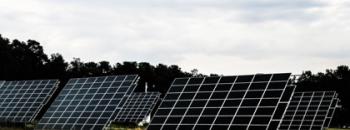
Santa Rosa Junior College Urban Microgrid Project
This project will integrate three types of distributed energy resource (DER) elements: solar photovoltaic (PV) generation, electrical energy storage, and load reduction devices and load control systems, all managed by a single microgrid controller.

Sonoma County Junior College District/ Santa Rosa Junior College
Recipient
Santa Rosa, CA
Recipient Location
2nd
Senate District
2nd
Assembly District
$2,646,819
Amount Spent
Active
Project Status
Project Update
The project completed in March 2025. All component testing and measurement and validation of microgrid performance and benefits to the campus has been completed. All deliverables have been submitted, and final report draft is under review by the CEC staff. The project will continue to collect and report microgrid performance data for a period of three years following completion of the grant.
The Issue
Within the past 10 years, Sonoma County has experienced three major wildfires that lead to widespread power outages and threatened the health and safety of the Santa Rosa Junior College community. Distributed energy resources (DERs) coordinated and controlled in a behind-the-meter microgrid can provide power to critical campus facilities and provide a place for community members to gather during outage events including public safety power shutoffs. Microgrids can also provide benefits to the grid and ratepayers broadly by participating in demand response programs. This project designed, commissioned, and operated a campus microgrid to validate these local and grid benefits while demonstrating the commercial viability and business case for replicable microgrid deployment at other California community colleges, universities, and public building complexes.
Project Innovation
The core innovations in the project include 1) operationalizing an adaptive load management strategy for campus buildings based on their level of priority, 2) integration and optimization of solar generation, energy storage, and load control systems by a single microgrid controller, and 3) development of methods for quantification of the value of resilience for campuses and other public facilities based on frameworks established in CPUC proceedings.
Project Goals
Project Benefits
The microgrid developed and demonstrated in this project provided economic, environmental, and resilience benefits to the campus and surrounding community while also supporting grid flexibility and reliability. The project learnings were shared with other community college campuses and public facilities to inform future microgrid investments.

Affordability
The microgrid will lower costs for the campus by reducing peak demand charges and energy costs through on-site generation and storage, while at the same time benefitting the grid and ratepayers broadly through participation in demand response programs.

Reliability
Reliability and power quality will be improved on both the college campus and local distribution system through demonstration of dynamic frequency regulation and voltage control technologies. Additionally, the microgrid will power critical services during outages, increasing community resilience.

Environmental Sustainability
The project will result in reduced greenhouse and other emissions associated with the campuses electricity use by supplying new, renewable generation and providing flexible demand that can reduce the need for polluting fossil peaker plants.
Key Project Members

David Liebman
Subrecipients

Worley Parsons
Center for Sustainable Energy
Stem Inc
SunPower Corporation, Systems
PXiSE Energy Solutions LLC
Match Partners
SunPower Corporation, Systems
Sonoma County Junior College District/ Santa Rosa Junior College