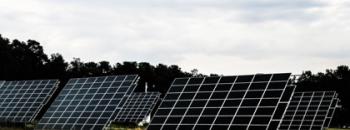
Reuse of Electric Vehicle Batteries for Solar Energy Storage
Repurposing used EV batteries as energy storage for PV systems.

RePurpose Energy, Inc.
Recipient
Fairfield, CA
Recipient Location
3rd
Senate District
11th
Assembly District
$2,201,052
Amount Spent
Active
Project Status
Project Update
The Repurpose Energy Microgrid Project is on schedule to achieve functional operation and receive Permission to Operate (PTO) in March 2026. Repurpose Energy has obtained UL 1974 certification, the national standard for battery repurposing, and is among the first companies in the United States to do so.
All hardware and physical components of the microgrid have been installed and tested, including the 34 kW solar carport, the 200 kWh energy storage system, and associated inverters. Following completion of software commissioning in late February 2026, the fire department and Authority Having Jurisdiction (AHJ) will conduct the final inspection and functional validation.
Upon receiving AHJ approval, RePurpose Energy will initiate the interconnection approval process with PG&E, under which the system will operate pursuant to NEM 2. Once the system becomes operational in March, EPRI will begin a validation study to quantify the system’s performance and associated benefits.
The Issue
Retired EV batteries can be repurposed to create lower-cost, more sustainable solar energy storage systems. Unfortunately, a lack of data on second-life battery degradation, performance, and cost has delayed the commercialization of this application. Without validated data, financiers and insurers are unable to effectively calculate risk to fund and insure these projects. As a result, used EV batteries are recycled prematurely while new lithium-ion batteries are produced for new stationary energy storage systems.
Project Innovation
RePurpose Energy is conducting a series of laboratory-based cycling tests to identify the degradation rate and effective useful life of individual used EV battery cells based on a variety of control strategies. The team is creating a scale model of a second-life EV storage system connected to a grid emulator to validate the optimal control strategy for a solar PV and energy storage system. Finally, the team is taking the learnings from the laboratory testing and deploying a full-scale demonstration installation to collect data on actual system performance. The demonstration site showcases resiliency and cost benefits to the identified business and local economy.
Project Goals
Project Benefits
The continued adoption of electric vehicles will generate waves of lithium-ion battery waste, which is difficult and expensive to recycle. This project will facilitate the diversion of battery waste and deferment of recycling costs by giving EV batteries a second life. One of the main barriers to second-life energy storage systems is the need for extensive cell testing and characterization. This traditionally requires a great deal of testing time and expense, resulting in erosion of the cost advantage of the used batteries. This project will result in a methodology to quickly and accurately estimate the remaining useful cycle life of a retired EV battery cell in a stationary energy storage system. This project will also demonstrate a second-life energy storage system paired with solar PV to increase solar self-consumption and generate backup power in the event of outages.

Affordability
The solar PV and batteries will reduce energy charges via on-site generation and time-of-use arbitrage, load reduction, and greenhouse gas emissions via reduction in on-peak energy demand. Additionally, the project will provide up to 6 days of backup.

Economic Development
The team has subcontracted a local EPC, solar installers, electrical engineering, architect, and various other roles to deploy the onsite renewable generation and energy storage, thus spurring economic development.

Environmental Sustainability
The site will achieve approximately 10.4 tons of CO2 reductions annually via installation of rooftop solar PV and second-life EV batteries.

Reliability
This project aims to deliver greater electricity reliability to the host site and its local community by providing backup power in the event of an unplanned outage or public safety power shutoff (PSPS). The Microgrid will deliver over 50,000 kWhs annually.
Key Project Members

Mauricio Castillo
Subrecipients

Electric Power Research Institute, Inc.
San Jose State University
Gridscape Solutions, Inc.
Charge Bliss Construction California, Inc. DBA Faraday Microgrids
Catlin Research & Consulting
Community Action Partners
Match Partners
Electric Power Research Institute, Inc.
Gridscape Solutions, Inc.
RePurpose Energy, Inc.
Chroma
Reyff Electric
Catlin Research &
Consulting