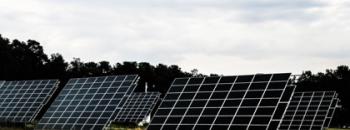
Production Scale-Up of Thermionic Energy Harvesters
This project will scale-up production of thermionic energy harvesters to create a increase concentrated solar power plant effiency and reduce capital cost.

Spark Thermionics, Inc.
Recipient
Berkeley, CA
Recipient Location
7th
Senate District
14th
Assembly District
$1,349,933
Amount Spent
Active
Project Status
Project Update
The project was completed in 2024. Spark completed cost modeling, identified new vendors, streamlined the manufacturing of crucial components, and introduced tools for rapid inspection and testing. Crucially, Spark diversified manufacturing routes for challenging components, notably the high-temperature emitter encapsulations. Automation has replaced or improved multiple manual steps, enhancing overall efficiency. These advancements are pivotal, providing Spark with versatile and cost-effective solutions for high-value markets.
The Issue
California relies heavily on solar PV and wind for clean renewable generation. However, these generation technologies cannot meet peak demand and therefore need to be supplemented with energy storage. Such storage can be provided by the combination of concentrated solar power (CSP) and thermal energy storage (TES), which resolves issues such as lifetime and reliability that plague battery storage. However, currently CSP adoption is limited by its cost, which is more expensive than PV despite being comparable in price several years ago.
Project Innovation
This agreement is to fund the production scale-up of Spark Thermionics' thermionic energy converter to the low rate production stage. When combined with next-generation CSP, the technology can increase the power output by 75-90% relative to today's best CSP plants. This additional power can drive down the cost to 5.6 cents/kWh. Under this agreement, the project team analyzed cost reduction for process development and manufacturing for the core and encapsulation components within the energy harvesters. By integrating Spark’s high-performance thermionic converters into a topping cycle scheme with CSP and thermal energy storage (TES), the levelized cost of electricity (LCOE) can be significantly reduced for conventional CSP + TES systems. With this technology, flexible generation can address the grid-level challenges of solar PV-generated electricity, namely variability, uncertainty, and nonsynchronous generation.
Project Goals
Project Benefits
The high-temperature energy harvesting technology will improve the efficiency of concentrated solar power generation, reducing the capital and operating costs associated with power generating systems. The combination of having a technology that can absorb adaptable amounts of heat and then utilize the heat for time-varying electrical consumption will expedite further large-scale integration of renewable resources to enable California's highly ambitious energy goals. This technology will allow for more integration of renewables for California at a lower cost.

Affordability
According to calculations for thermionic topping cycles led by NREL, the levelized cost of electricity (LCOE) for next-generation CSP with TES when combined with a thermionic topping cycle can be as low as $0.056 / kWh.

Reliability
California is targeting 60% of retail electricity to come from renewables by 2030. However, a high penetration of intermittent renewables to achieve this target could jeopardize grid reliability without a source of flexible generation. CSP +TES can not only provide renewable generation, but also flexible generation.
Key Project Members

Jared Schwede
Subrecipients

Lorimer Holding Company LLC
Match Partners
Spark Thermionics, Inc.