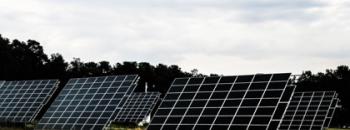
Open Vehicle to Building/Microgrid Integration Enabling ZNE and Improved Distribution Grid Services
Advancing an energy management system that integrates PEV charging, PV energy generation, and battery storage.


Electric Power Research Institute, Inc.
Recipient
Palo Alto, CA
Recipient Location
13th
Senate District
23rd
Assembly District
$1,498,264
Amount Spent
Completed
Project Status
Project Result
The project team developed the Smart Power Integrated Node (SPIN) system to manage plug-in electric vehicle charging with solar photovoltaic generation, stationary energy storage, and residential loads. The system was developed to allow operation when connected to the grid and participating in grid services, and when disconnected from the grid and supporting backup loads. Software was developed for multiple vehicle-grid-integration use cases. Testing of power electronic components and the SPIN system was conducted at the National Renewable Energy Laboratory and Oak Ridge National Laboratory, and the impact of bidirectional operation on the PEV battery was quantified through accelerated testing in a controlled laboratory environment. The project also evaluated customer and ratepayer benefits associated with widespread adoption and shared project results with industry to move the SPIN prototype through product development.
View Final ReportThe Issue
The CPUC defines plug-in electric vehicles as a distributed energy resource, but discharging energy stored in the vehicle to the grid or to grid-connected buildings remains challenging and commercially limited. Barriers include the complex communication interfaces between the vehicle, charger, and electric grid; high costs of equipment; and automobile manufacturer uncertainty about impacts to vehicle battery degradation. There are few commercial products that building owners can purchase that allow them to use the electricity stored in their plug-in electric vehicle battery as backup power during outages, such as public power safety shutoffs.
Project Innovation
There are a few core elements that make the SPIN system competitive with other intelligent energy management systems on the market. The integration of multiple components within the SPIN system avoids redundant equipment, simplifies installation, and reduces hardware and installation costs. Advanced power electronics were used including bidirectional converters built using silicon carbide semiconductors that increased system efficiency. This system also allows vehicle-to-grid operation with a CCS bidirectional charger and meets standard enabling interoperable communication between the utility and distributed energy resources.
Project Goals
Project Benefits
The Smart Power Integrated Node (SPIN system) provides customers with bill savings and resilience benefits at a significantly lower cost than alternative stationary storage solutions. The SPIN system manages energy from the plug-in electric vehicle battery and provides power to the home or commercial building during peak electricity demand and outages.

Environmental Sustainability
The Smart Power Integrated Node (SPIN system) integrates onsite solar photovoltaics and coordinate plug-in electric vehicle bidirectional charging to maximize renewable consumption and avoid local over-generation.

Reliability
The Smart Power Integrated Node (SPIN system) provides customer resilience during outages and respond to demand response signals.
Key Project Members

Andra Rogers
Subrecipients

Oak Ridge National Laboratory
U.S. Department of Energy, National Renewable Energy Laboratory
Gridscape Solutions, Inc.
Kitu Systems
Flex Power Control, Inc.
Fiat-Chrysler Automobiles
LG Electronics
Match Partners
Electric Power Research Institute, Inc.
Oak Ridge National Laboratory
U.S. Department of Energy, National Renewable Energy Laboratory
Flex Power Control, Inc.