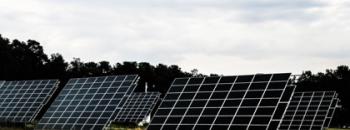
The Nexus of Clean Energy, Healthy Forests, and a Stable Climate: Innovative Biomass Gasification for Sustainable Forest Management
Developing a modular technology that can convert dead trees to produce combined heat and power.
All Power Labs, Inc.
Recipient
Berkeley, CA
Recipient Location
7th
Senate District
14th
Assembly District
$1,500,000
Amount Spent
Completed
Project Status
Project Result
The project successfully demonstrated both a combined heat and power microgrid that provides 50 kW of on-demand renewable energy and a "Chartainer," which is a high-throughput waste processing solution that produces combined heat and biochar at commercial scales. These two technologies were developed in parallel during the five-year agreement term, processing forestry waste with a goal of reducing wildfire risk related to the dead tree crisis, based on a model for funding and scaling proactive forestry management and wildfire remediation. This project is complete and the final report is being finalized for publication.
The Issue
Climate change contributes to California's forest health crisis, with a tree mortality emergency of over one hundred million dead trees, at risk of being ignited in catastrophic wildfires. There is a need for an economical and climate-sensitive way to reduce the risk of catastrophic wildfire, while also addressing the state's need for renewable energy. All Power Lab's pre-commercial "Powertainer" technology -- a containerized 150kW gasification system that converts forestry waste into renewable energy and sequestered carbon -- is designed to run profitably under the SB1122 BioMAT feed-in-tariff. Yet high technological and economic barriers to widespread commercial deployment remain.
Project Innovation
This project supports the development of the Powertainer+ (PT+) -- a multi-modal power and products platform designed to generate low-cost renewable energy, process thousands of tons of forestry waste, and sequester carbon. The Powertainer+ will include a combined heat and power module, increase the power capacity to 50 kW, and increase the forestry waste processing capacity.
Project Benefits
Broadly, the goals of this project are to decrease the modular technology platform's levelized cost of electricity, increase its forestry residue processing capacity, add new value streams in the forms of hot water and biochar production, and enhance the system's carbon sequestration capacity.

Economic Development
The PT+ biochar off-take provides the critical linkage between the forest and agricultural industry value chains. The PT+ creates economic benefit by producing marketable biochar for distribution companies and farmers.

Environmental Sustainability
The PT+ creates demand for biomass that was previously considered waste, creating value and increasing incentives to remove forest residues by processing forestry residue from CalFire designated High Hazard Zones.

Reliability
The PT+ will increase PG&E’s grid reliability by reducing peak loading by up to 250 kW. The technology supports increased grid reliability in hard to serve places and reduced peak demand charges.

Safety
This project will increase safety by creating an economic driver to support sustainable forestry management activities, thus reducing the risk of catastrophic wildfire and the associated damage to public facilities.
Key Project Members

Ariel Fisk-Vittori
Subrecipients

Humboldt State University Foundation, Schatz Energy Research Center
PACE Engineering
Sol Rebel
Tom Miles Consultancy
Match Partners
Humboldt State University Foundation, Schatz Energy Research Center
All Power Labs, Inc.
Anderson Biomass Complex