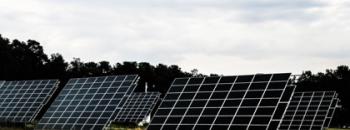
Long Duration 50 kW Energy Storage with Aquifer Pumped Hydro

Antelope Valley Water Storage, LLC
Recipient
Lancaster, CA
Recipient Location
21st
Senate District
39th
Assembly District
$1,584,567
Amount Spent
Active
Project Status
Project Update
The 50 kW Aquifer Pumped Hydro (APH) system is nearing operational readiness. Design and construction tasks have been completed, and the well system has been assembled. Most of site preparation is complete, although a few tasks remain, including interconnection with the local IOU, installation of a solar array, and final inspections.
In 2025, work was paused on this project for 6 months due to a potential regulatory issue with the Federal Energy Regulatory Commission (FERC). Following discussions with FERC, this issue was resolved and work has resumed.
In 2026, this system will be commissioned, and a 12-month data collection period will begin to test and validate the performance of this technology under real world conditions.
The Issue
The increased emphasis on energy resilience in the state is driving the need for longer duration energy storage backup capabilities. Longer duration energy storage and energy discharge is needed to respond to unplanned grid outages, curtailment risk, Public Safety Power Shutoffs (PSPS), and to increase renewables penetration. Disadvantaged and Low-Income Communities are especially vulnerable to preemptive PSPS shutoffs. As wildfires become more common, new energy storage/discharge technologies are needed that provide economical, standalone power.
Specifically, the California electricity grid is facing three issues that could benefit from longer duration energy storage:
Evening Ramp Up: There is not enough power for the grid during the 5-hour evening ramp up (from 4:00 to 9:00 p.m.) as solar goes offline but consumers turn on appliances. The 2-4 hour discharge of lithium batteries has trouble covering the 5-6 hour ramp up period.
Public Safety Power Shutoffs: Increased wildfire risks have forced Investor-Owned Utilities to shut down transmission lines during high wind events. For example, in October of 2019, power to 800,000 customers (2.5-3.0 million people) was shut off due to wildfire risks. These preemptive shutoffs created major disruptions and may have contributed to at least one death.
Overgeneration: In non-summer months, especially in the springtime, there is a glut of solar energy in the afternoons and a dearth of generation in the early evening hours. This creates risks of overgeneration and curtailment of renewables.
Over 90 percent of the energy storage systems built to date in California use lithium-ion batteries. Excessive reliance on lithium batteries can create materials and minerals shortages, and safety issues from thermal runaway. Consumed lithium batteries can also create a disposal problem.
The California grid is facing three issues that could benefit from longer duration energy storage:
1. Evening Ramp Up: There is not enough power for the grid during the 5-hour evening ramp up (from 4:00 to 9:00 p.m.) as solar goes offline but consumers turn on appliances. The 2-4 hour discharge of lithium batteries has trouble covering the 5-6 hour ramp up period.
2. Public Safety Power Shutoffs: Increased wildfire risks have forced Investor Owned Utilities to shut down transmission lines during high wind events. For example, in October of 2019, power to 800,000 customers (2.5-3.0 million people) was shut off due to wildfire risks. These preemptive shutoffs created major disruptions and may have contributed to at least one death.
3. Overgeneration: In non-summer months, especially in the springtime, there is a glut of solar energy in the afternoons and a dearth of generation in the early evening hours. This creates risks of overgeneration and curtailment of renewables.
Over 90% of the energy storage systems built to date in California use lithium-ion batteries. Excessive reliance on lithium batteries can create materials and minerals shortages, and safety issues from thermal runaway. Also, lithium batteries have a limited lifetime due to the number of cycles that can be performed, typically 500 to 1,500. With daily use, a lithium battery is worn out in about 3 years. Old lithium batteries create a disposal problem. They are also limited to a 2-4-hour discharge, which is not enough to cover the evening ramp up.
Project Innovation
A groundwater storage system will be used to store electrical power. Groundwater will be used to fill surface pipelines. An existing well with 150 kW (200 HP) nameplate capacity will be retrofitted to also act as generator. At 35 percent generation efficiency, the well will produce 52.5 kW of power. For the demonstration, the stored energy will be discharged to provide on-peak power to SCE during the evening ramp up and recharged off-peak.
The technology is both modular and mobile. All the equipment necessary to convert a well pump into a generator is housed in a shipping container on a trailer. The trailer can be hauled to any well site, connected to the well and the electrical grid to convert a well into an energy storage device. The project is designed to store surplus grid and solar energy during the day and discharge it during evening peak demand periods. It will provide up to 10 ours of energy storage, including five hours of evening generation during summer weekdays to help reduce curtailment and support the grid.
The facility will be operated for one year to demonstrate that a minimum of 10-hour discharge can be produced reliably. The regeneration well will be operated to provide at least 50 kW of energy discharge using local groundwater.
Please also see EPC-20-008 project information to better understand the scaling of this technology.
Project Benefits
This project is part of a broader initiative to explore non-lithium energy storage technologies in California, in order to diversify the state’s energy storage portfolio, develop cheaper and more efficient energy storage systems, and mitigate the potential safety issues associated with lithium-ion batteries.
Aquifer pumped hydro technology is promising in its potential to use pre-existing infrastructure widely available in California, deliver long discharge and storage durations (to fill challenging seasonal energy storage roles on the grid) with limited capacity degradation, and avoid the use of critical minerals.
This project (along with EPC-20-008 occurring in parallel), will provide valuable operational data for this concept, to allow stakeholders to better understand the role that APH can play in the state’s longer-term energy transition, and specifically test the capacities in which it could compete with Li-ion technologies most effectively.

Affordability
Aquifer pumped hydro is estimated to cost less than a lithium ion battery which can lead to lower costs for energy storage and eventually translate to bill savings. This is because it relies on existing infrastructure (wells) and proven technology. It uses durable water wells and pumps that have a long lifecycle.

Reliability
The 25-hour discharge duration can provide peak power during the evening ramp up five days in a row, increasing electric reliability. It can also absorb surplus renewables during the spring period of renewables overgeneration risk.
Key Project Members

Lon W. House, Ph.D.
Subrecipients

3RValve
Match Partners
Antelope Valley Water Storage, LLC