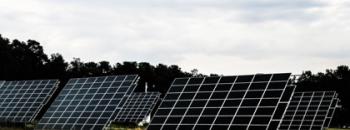
Lancaster Advanced Energy Community (AEC) Project
Developing a Southern California AEC centered around solar PV, stationary storage, and electric vehicles.
Zero Net Energy (ZNE) Alliance
Recipient
Davis, CA
Recipient Location
3rd
Senate District
4th
Assembly District
$1,350,689
Amount Spent
Completed
Project Status
Project Result
This project concluded in March 2018. The project has resulted in a shovel-ready advanced energy community design in preparation for Phase II that includes a microgrid connecting a zero-net-energy community of 75 single-family homes for low-income residents. The project team also developed a number of resources for local governments to overcome barriers to building ZNE communities and widespread deployment of distributed energy resources. For example, they developed a financial model and policy framework for municipalities to consider land-secured financing as an option for building new residential ZNE communities. They also developed a DER valuation framework to help municipalities identify and analyze the potential value streams from community-scale deployments of solar PV, electric vehicles, battery storage, and demand response programs.
The Issue
In 2011, the city of Lancaster set a goal to become the first Zero Net Energy (ZNE) City. Regulatory and pricing issues, including high up-front costs, burdensome interconnection applications, and unproven business models continue to be significant barriers to deployment of advanced energy technologies at the scale Lancaster needs to achieve its goal. This project seeks to address (1) how to enable ZNE residential communities from both a financial and technical perspective, and (2) how to capture the value of DERs in a standardized manner to develop viable business models and attract the financial investment needed to support widespread deployment of clean energy resources.
Project Innovation
In collaboration with the City of Lancaster and Lancaster Choice Energy (LCE), this project planned a ZNE microgrid connected to an affordable housing project that enables the cost-effective deployment of advanced technologies. The microgrid design minimizes the impact of increasing renewables on the grid, increases DER design flexibility, enables local control of energy management, and exploits the plummeting cost of islanding capability to provide valuable resiliency benefits to the community. The project team also developed a community DER valuation framework that assesses the value of DERs on an aggregated and integrated network basis from multiple stakeholder perspectives by combining various value streams and evaluating evolving revenue and market participation opportunities. This framework was used to inform the shared services model behind a "Green District" program that integrates storage, solar, and smart building technology as a service for large commercial and industrial customers to reduce their demand charges while allowing LCE to save on procurement costs. More information can be found at the project website: [a href="http://www.znealliance.org/projects/lancaster/"]http://www.znealliance…]
Project Benefits
Local governments can play a role in achieving California demand reduction goals by helping facilitate community-scale deployment of Integrated Distributed Energy Resources (IDER) such as energy efficiency, onsite renewables, demand response, and electric vehicles. This project will pilot innovative planning, permitting, and financing approaches and tools to help improve the business case for IDER adoption at the community scale.

Consumer Appeal
This project will increase consumer familiarity with ZNE homes and communities, which should increase support from the local community for greater deployment of advanced energy technologies at a community scale. The project is al

Affordability
This project is outlining how ZNE residential subdivisions can use municipal bonds to finance DER infrastructure with lower interest rates than commercially available third party financing. The project is also working on streamli

Economic Development
By providing tools to overcome some obstacles to DER deployment and DER programs, this project could spur the development of these sectors in other communities. When deployed properly, DERs can provide energy savings, and their i

Reliability
The tools and resources developed under this project will assist in identifying citywide optimal microgrid sites that will have the most local generation potential and minimize impacts on grid reliability.

Energy Security
Microgrids using renewable energy generation, coupled with storage systems, allows consumers to generate and manage their own energy locally.
Key Project Members

Richard Schorske
Subrecipients

ConSol
Energy Solutions International
Olivine, Inc.
Sharon Tobar
NHA Advisors, LLC
Stacey Hobart
Match Partners
City of Lancaster