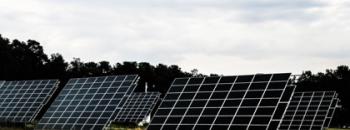
Innovative School Bus Charging for Resilient Communities
Lawrence Berkeley National Laboratory
Recipient
Berkeley, CA
Recipient Location
9th
Senate District
14th
Assembly District
$2,744,033
Amount Spent
Active
Project Status
Project Update
LBNL has identified and purchased a technology solution for the project - an all-in-one direct current (DC) solar canopy, battery storage, and DC bus charging system - from Schneider Electric. Permits and construction plans were finalized in February 2026, with system installation planned for Spring 2026.
The Issue
California is not building charging infrastructure quickly enough to fully electrify the transportation sector, especially for medium- and heavy-duty (MDHD) plug-in electric vehicles (PEV). The integration of a large number of MDHD PEV into the grid requires significant upgrades to grid infrastructure to handle the increased demand. There has not been a widespread adoption of distributed energy resources (DERs) to support MDHD PEV charging due to grid integration and capacity constraints, high power demand from MDHD PEV, the cost of deploying DERs, and the complexity and challenges associated with integrating multiple types of equipment and components.
Project Innovation
The purpose of this agreement is to fund the design, construction, and evaluation of an electric school bus depot charging system, featuring the use of local distributed energy resources (DERs) such as solar photovoltaics (PV) and battery energy storage systems (BESS). The PEV charging system will use an efficient direct coupling (DC)-coupled topology that can support MDHD PEV charging while helping to reduce the strain on the existing utility infrastructure. The proposed system is an all-in-one technology solution that is optimized between the solar PV canopy and the PEV battery and is ideal for EV school buses that are parked at times of peak solar PV generation. It can operate without connection to the grid, reduces complexity and installation cost and timeline, and greatly reduce demand charges during school hours. In addition, the EV school buses will also serve as a backup and can be connected to the school’s critical loads, allowing the school cafeteria to function as a resilience hub during an outage or disaster.
Project Goals
Project Benefits
This project demonstrates a scalable electric school bus charging system that integrates solar photovoltaics (PV), battery energy storage, and direct-current (DC) fast charging into a single system. By directly coupling distributed energy resources with vehicle charging, the system can reduce the need for costly grid upgrades while enabling large-scale electrification of medium- and heavy-duty vehicle fleets. The project evaluates how solar generation and battery storage can support reliable charging while reducing demand charges and peak grid impacts. If successful, this approach could enable faster and more cost-effective deployment of electric school bus infrastructure across California. Increased deployment of DER-integrated charging systems can reduce grid infrastructure costs, support renewable energy integration, improve community resilience during outages, and help accelerate the transition away from diesel-powered school buses, delivering environmental and economic benefits to California ratepayers.

Affordability
The proposed system will provide a highly scalable charging system for electric school buses that has a maximum degree of flexibility, is fully resilient, and represents the lowest total cost of ownership.

Reliability
The solar-powered charging will provide additional reliability over grid-tied and alternating current (AC)-coupled PV charging.

Environmental Sustainability
The proposed system will provide greenhouse gas (GHG) and air emission reductions by replacing diesel bus with grid-connected electric buses.

Consumer Appeal
The project's innovative electric school bus depot charging system, which includes an integrated solar canopy and stationary storage, can appeal to consumers who are interested in eco-friendly transportation solutions and sustainable energy generation.

Economic Development
The project can potentially stimulate economic development by creating new jobs related to the design, construction, and commissioning of the DER package and associated infrastructure. In addition, it can promote the development of local renewable energy resources, leading to increased economic activity and investment in the area.

Equity
The project can potentially promote equity by expanding access to affordable and reliable renewable energy for underserved communities, particularly those located in the trade corridor. Additionally, by showcasing the benefits of fleet electrification and providing cost savings, the project can potentially increase opportunities for small and minority-owned businesses in the transportation industry.

Safety
By testing the new technology of the Schneider charging system and promoting off-grid resiliency, the project can increase safety by ensuring that the fleets have access to reliable and uninterrupted power supply in case of power outages and minimizing the risk of fire incidents associated with battery storage.

Energy Security
The proposed DER can provide off-grid charging for the fleet vehicles, potentially for multiple days due to continued contributions from the solar PV generation.
Key Project Members

Vagelis Vossos
Daniel Gerber
Morgan Faulkner
Laura Wong

Match Partners

Breathe California of the Bay Area
Franklin-McKinley
Heila Technologies Inc
Microgrid Labs Inc