Elevating Microgrid Production to Optimize Widespread Energy Resilience (E.M.P.O.W.E.R)
BoxPower’s Remote Grid SolarContainer (‘SolarContainer’) is a ‘plug-and-play' turnkey microgrid product that meets all utility standards for safety and reliability with renewable energy

BoxPower Inc.
Recipient
Grass Valley, CA
Recipient Location
1st
Senate District
1st
Assembly District
Active
Project Status
Project Update
In 2025, BoxPower made significant progress advancing the design, validation, and manufacturing readiness of its next-generation modular microgrid platform. The team finalized a digital twin model and manufacturing drawing package. This milestone established a baseline-controlled, production-ready design framework that supports accelerated iteration, subsystem optimization, and streamlined manufacturability. The design for manufacturing improvements includes enclosure drawing refinements to reduce fabrication rework, new DC voltage architecture to provide higher energy density, upgraded PV structural designs to meet higher wind-loading requirements, and enhanced control panel integration to reduce field wiring complexity. These updates directly support the project’s goal of reducing production time while increasing system scalability and reliability.
A major focus throughout 2025 has been the development of BoxPower’s Test Bench prototype platform. Designed as a configurable integration and validation system, the Test Bench enables subsystem-level testing of PV (DC- and AC-coupled), different voltage battery architectures (48V, 1000V, and 1500V DC), multi-voltage AC outputs (120/240V split-phase, 208V & 480V three-phase), generator integration, and utility-grade controls. This platform is a critical risk-reduction step before full pre-production prototype builds and supports achievement of higher Manufacturing Readiness Levels.
Collectively, 2025 has marked a transition from design review and documentation to hands-on prototype development, manufacturing optimization, and supply chain localization. The work completed this year positions BoxPower to complete subsystem validation, advance pre-production prototype builds, and move toward Low-Rate Initial Production (LRIP) under subsequent project phases.
The Issue
Electric distribution wires have ignited approximately one-third of California’s most devastating wildfires since 2015. These fires are predominantly caused by vegetation interference with bare conductors, of which there are more than 40,000 miles located in high wildfire threat districts across California. Historically, utility efforts to reduce wildfire ignitions have taken two forms: grid hardening in the form of covered conductor or undergrounding; and power shutoffs – either planned public safety power shutoffs (PSPS) or sensitive protective relays that shut off power at the first sign of a ground fault. Neither solution is ideal, as grid hardening costs anywhere from $1.5-4.0M per mile, and PSPS have caused outages for more than 3.6 million Californians – disproportionately impacting rural, disadvantaged, and low-income communities.
In addition to wildfire risk, another daunting challenge facing California energy consumers is the inability of the current electric grid to meet anticipated load increases from electric vehicle (EV) charging in the next decade, particularly in rural areas.
Project Innovation
BoxPower seeks to address both wildfire risk and increased load. By replacing high-risk bare conductors with Remote Grid SolarContainers, electric utilities can eliminate wildfire risk for substantially less cost than grid hardening, with better reliability and cleaner energy than either traditional solution.
The Remote Grid SolarContainer also offers a safer, cost-effective, rapidly deployable solution to address capacity limitations for EV chargers in rural areas. By pairing rural EV chargers with Remote Grid SolarContainers, utilities, EV charging companies, and rural communities can eliminate the need for costly distribution system upgrades.
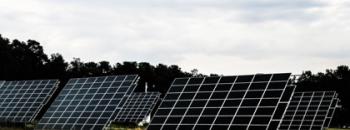
The purpose of this project is to advance the Remote Grid SolarContainer to a Manufacturing Readiness Level of 8 - achieving Low-Rate Initial Production to prepare the product for mass production. The Remote Grid SolarContainer is a turnkey microgrid product, providing a utility-grade renewable energy supply capable of rapid deployment in any location. The product consists of a rapidly deployable solar array photovoltaic subsystem, a containerized battery energy storage system, utility-grade monitoring and controls Supervisory Controls and Data Acquisition (SCADA) subsystem, heating ventilation and air conditioning subsystem, and optional backup renewable propane generators. The Remote Grid SolarContainer can be modularly scaled to meet loads from 30kW - 1,000kW and rapidly deployed in regions with either non-existent, unreliable, or capacity-constrained grid infrastructure.
Project Goals
Project Benefits
The SolarContainer enhances safety, reliability, and affordability for California ratepayers, particularly in wildfire-prone and rural areas, by addressing wildfire risk, poor reliability, and rising electricity costs. Remote Grid SolarContainers replace overhead power lines in high-risk areas, eliminating fire hazards from utility infrastructure. They also improve reliability for rural communities affected by PSPS and outages by providing clean, local generation. Additionally, they significantly reduce wildfire mitigation and grid modernization costs, with each project saving an average of $6 million in infrastructure expenses. Scaled deployment could save California ratepayers over $4-5 billion in avoided grid hardening costs.

Safety
Remote Grid SolarContainers replace overhead power lines in high-risk areas, eliminating fire hazards from utility infrastructure.

Reliability
Remote Grid SolarContainers improve reliability for rural communities affected by PSPS and outages by providing clean, local generation.

Affordability
Remote SolarGrid Containers significantly reduce wildfire mitigation and grid modernization costs, with each project saving an average of $6 million in infrastructure expenses.
Key Project Members

Alex Killam

Angelo Campus
Subrecipients

BAEHR HEATING AND AIR INC
PFADT, INC, dba Precision Electric
Freschi Construction INC
ULSE INC.
DAVID LONG CONSULTING LLC
Match Partners
BoxPower Inc.