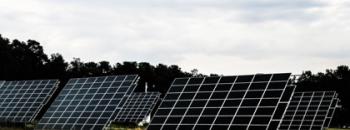
Demonstration of integrated photovoltaic systems and smart inverter functionality utilizing advanced distribution sensors
Demonstration of integrated photovoltaic, energy storage, and smart inverter for zero net energy facility

Lawrence Berkeley National Laboratory
Recipient
Berkeley, CA
Recipient Location
9th
Senate District
14th
Assembly District
$1,000,000
Amount Spent
Completed
Project Status
Project Result
The project team built a central infrastructure and models for power systems study, mitigation strategies and control schemes. This project is pushing the state of the art by developing a new controller architecture based on model predictive control (MPC) methods to provide optimal control of the entire system of battery storage, PV, and the building load, subject to a variety of power constraints, with the objective of minimizing the total energy cost for the customer. The results of this project are multifold and well aligned with the overall objective of enabling large renewable generation on the electrical power grid. The controller was field tested and improved over the course of 3 months. The team published the developed tools and models on four public repositories on GitHub; and presented project findings, and results at two technical conferences.
The Issue
Power distribution networks of today have limited visibility and diagnostic capabilities and were designed to accommodate a limited number of rotating power generation plants. A future grid that incorporates large numbers of distributed PV systems will require different and more complex control mechanisms, which in turn will require coordinated control of both utility distribution equipment and solar inverters.
Project Innovation
The project team developed, demonstrated, and evaluated at the LBNL Facility for Low Energy Experiments (FLEXLAB) test bed the ability of a smart inverter controller to enhance and optimize grid support and system performance of an integrated pilot scale of an advanced PV and storage system. The system includes a 14 kilowatt (kW) PV system and 19 kWh of battery storage. The project team evaluated the use of distribution synchrophasor unit data to support specific visualization and control applications on distribution circuits.
Project Benefits
The project advanced the state of technology by introducing a smart inverter with an embedded synchrophasor that is scalable across investor-owned utility territory, enabling well-coordinated and managed high-density PV installations. The technology is particularly interesting to PV inverter manufacturers and system integrators of combined PV and battery storage systems. The information delivered by this technology informs inverter settings, in accordance with California Rule 21, with the overall objective to improve the reliability of the electrical grid.

Affordability
The installation includes 14 kW of PV and a 19 kWh battery providing 4.8 kW peak power for 4 hours. During the field testing, the controller responded and provided near optimal control of the storage system for a time-varying ele

Reliability
Ratepayers will see electricity reliability improve as high-density PV installations are coordinated and managed more efficiently.

Safety
This project will enhance grid safety by improving the ability for PV installations to detect and understand grid conditions and ensure safe operation in the event of grid failures.
Key Project Members

Christoph Gehbauer
Subrecipients

Tesla, Inc.
SolarCity
Consolidated Engineering
Match Partners
Tesla, Inc.