Demonstration of Community Scale Low Cost Highly Efficient PV and Energy Management System
Bringing advanced generation and storage together to support industrial energy needs.
The Regents of the University of California, on behalf of the Davis Campus
Recipient
Davis, CA
Recipient Location
3rd
Senate District
4th
Assembly District
$1,227,762
Amount Spent
Completed
Project Status
Project Result
The energy system was installed in December 2018 and commissioned in January 2019. The system has been operating and collecting data since the beginning of 2019 and enabled analysis of the reduction in facility's energy demand. The project's success in utilizing second-life batteries for energy storage led to a start-up company to commercialize the idea. UC Davis has a collaboration with Case Western University to share data from the system to aid in developing battery models used to predict the lifetime of these batteries as well as the life-cycle emissions from electric vehicle batteries. Results indicate up to $2,000 per month in bill savings and up to 3000 kg CO2/month in emissions reductions, with additional savings possible with further controller optimization. The project has hosted a number of tour groups to share the project approach and outcomes. Additionally, the project has provided some reliability support for the electrical grid, including in September 2020.
The Issue
The intermittent nature of solar energy generation requires special attention when connecting to the grid to ensure balance between energy demand and production. Although energy storage has the potential to serve multiple valuable functions in a microgrid setting, it is currently an expensive resource in the early stages of technology development. Renewable-based microgrids require a control system to support reliability.
Project Innovation
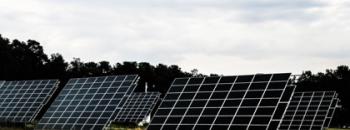
This project is demonstrating a combination of advanced PV generation, energy storage, and an energy management system to reduce average daily power and daily peak energy demand by more than 10%. The project includes a smart electrical energy storage system that integrates retired electric vehicle batteries. The generator and storage system are controlled by a commercial-grade microgrid controller. The demonstration site is in the Robert Mondavi Institute at the UC Davis campus.
Project Benefits
The combination of advanced PV and the energy management system will result in a significant reduction in annual grid electricity consumption - estimated at over 80% or a cost savings of roughly $29,000 per year with associated greenhouse gas reductions of about 250 tons per year. Furthermore, the success of this project will provide follow-on benefits to California's large wine industry by proving that winemaking can be carried out with sustainable energy solutions.

Consumer Appeal
California's wine and brewery market represents a significant market. The Robert Mondavi institute is a leader in sustainable winemaking and the successful demonstration is expected to encourage adoption elsewhere.

Affordability
The project aims to reduce the high costs of energy storage by using second-life electric vehicle batteries and an advanced energy management system. The combination of advanced PV and energy management systems will result in significant reduction in annual grid electricity consumption - estimated at over 80%, with electricity cost savings of $29,000 per year.

Economic Development
Proving the concept of a high-penetration renewable microgrid at the Robert Mondavi Institute is expected to lead to adoption of similar concepts at a number of winemaking facilities and breweries across California.

Environmental Sustainability
The project will reduce CO2 emission by as much as 250 tons per year. Furthermore, the success of this project will provide follow-on benefits to California's large wine industry by proving that winemaking can be undertaken with sustainable energy solutions.

Energy Security
This project is increasing energy security on the UC Davis campus through a microgrid with the potential to function during grid outages.
Key Project Members

Jae Wan Park
Match Partners

The Regents of the University of California, on behalf of the Davis Campus
SMA America
OSISoft, LLC
Nissan North America