DC Nanogrid for Non-Residential HVAC Application
Project Update
As of the end of 2025, the project has conducted a comprehensive market potential study, which included a literature review of over 30 sources and interviews with more than 20 subject matter experts to assess market and technological challenges. The design team has shortlisted suitable packaged RTUs and components for constructing the DC prototype unit. Additionally, they have developed a one-line diagram for the HVAC system, serving as a foundational element for the nanogrid system design. The field team has also identified and engaged with two prospective sites for field installation.
The Issue
Commercial buildings typically rely on AC power from the grid to run essential systems, including HVAC. However, many buildings also have onsite energy sources like solar panels and battery storage, which produce or store DC power. Since HVAC systems are designed to run on AC, the DC power must be converted multiple times—first to AC for use, and then back to DC for storage—leading to energy losses of up to 20%. These extra conversion steps reduce the overall efficiency of using onsite solar and battery systems to power HVAC.
Additionally, when solar panels generate more electricity than a building needs, the excess energy is either sent back to the grid or wasted. This can create challenges for grid operators, who must balance unpredictable solar input with other energy sources. As more buildings adopt solar and battery systems, managing this balance becomes increasingly complex. The most efficient and beneficial approach is to use as much of the solar energy onsite as possible, which reduces demand on the grid and improves energy reliability.
Project Innovation
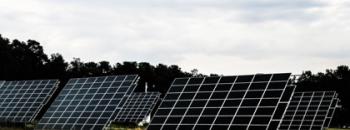
The project team proposes to design, develop and demonstrate a novel DC HVAC Nanogrid Hub for commercial building applications featuring a packaged rooftop air conditioner & heat pump rated up to 12.5 tons with DC backbone, an on-site solar PV interfaced to the DC backbone through a string optimizer, an energy storage device interfaced to the DC-link using a DC-DC converter, and a step-down converter to generate a 48V interface for auxiliary loads like lighting, tools, and electronics.
The Hub connects to a 208V three-phase AC panel through a grid-side disconnect device for protection and islanding, minimizing infrastructure modifications and installation costs. A bidirectional interface fed from the 208V panel generates a regulated DC bus for the components. The DC backbone eliminates the need for multiple back-and-forth AC to DC conversions, improving overall system efficiency. The Nanogrid Hub aims to enhance on-site energy use, grid support during peak demand, affordability, and resilience of commercial buildings by enabling control of the on-site energy generation, storage, and management.
Project Goals
Project Benefits
This Agreement enhances reliability and resilience by reducing HVAC dependence on grid power during peak demand. As solar generation drops in the evening, grid energy use increases, straining the grid and requiring fast-responding backup plants. By shifting HVAC loads and using onsite solar and battery storage through the Nanogrid Hub, this project supports local and grid-wide resilience. It also aids recovery after outages, helping maintain power quality and safety for California customers.

Affordability
The proposed packaged DC HVAC nanogrid solution will allow the customer to provide heating and cooling using on-site DERs, reducing utility bill costs especially during peak periods.

Reliability
The project will result in reduced dependence on the utility grid because the system can operate even during grid outages, increasing reliability and resilience.
Key Project Members

Cristalle Mauleon
Subrecipients

Match Partners