Critical Resilience for Fire and Emergency Facilities with the Soboba Band of Luiseño
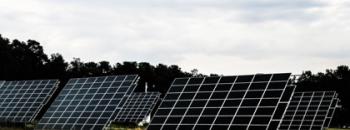
This project will demonstrate a vanadium redox flow battery combined with solar PV at the Tribal community fire station to provide at least 10 hours of energy storage. The project will validate the system's performance as an integrated hardware and


GRID Alternatives
Recipient
Oakland, CA
Recipient Location
7th
Senate District
18th
Assembly District
$1,168,848
Amount Spent
Active
Project Status
Project Update
In 2025, the Soboba Band of Luiseño Indians Building Department inspection and Southern California Edison’s utility interconnection processes were initiated. However, a third-party consultant hired by the building inspector requested modifications for the photovoltaic (PV) and storage systems to be separately derived. The requested modifications were implemented, and the system was re-inspected and passed in early 2026. Interconnection is anticipated to be completed in the first quarter of 2026, at which point data collection and formal measurement and validation will begin.
The Issue
The Soboba Band of Luiseño Indians is highly impacted by public safety power shut offs (PSPS) and grid outages. Due to historic energy insecurity on the reservation and multiple power outages annually, the tribe's fire station and emergency response facility were without power and limited in their ability to provide critical services and emergency response. Commercially available lithium-ion batteries are prohibitively expensive for providing backup power for the duration of outages experienced by the tribe, which average seven hours but can extend to 24 hours.
Project Innovation
The core innovation of this project is the integration of a vanadium redox flow battery combined with solar PV at the tribal community fire station to provide at least 10 hours of energy storage. The project will validate the long-duration storage microgrid’s performance as an integrated system that can perform load shifting, peak shaving, and provide critical resiliency during utility power outages. The data obtained on capital cost, operating cost, performance, and lessons learned will support future commercial deployments.
Project Goals
Increase resiliency by providing 10+ hours of backup power to the tribe’s fire station and emergency response facilities.
Reduce electricity bills by $13,000 per year and support grid reliability by participating in demand response programs.
Reduce facility emissions over 20 years: 1.1M lbs of GHGs and 1,000 lbs of air pollutants vs current operations.
Project Benefits
This project will increase resilience, reliability, and lower customer electricity bills for a tribal community while supporting critical facility operations. The long duration energy storage microgrid will bolster the tribe’s in-house emergency response, alleviating potential demand on surrounding communities’ emergency response resources. The performance data and lessons learned in this project will provide a case study for development of replicable approaches for implementing long duration energy storage to increase energy resiliency in communities impacted by PSPS and other grid outages.

Affordability
Affordability
This project will demonstrate a long duration energy storage microgrid that reduces energy costs for the Soboba tribal community fire station by more than $13,000 per year while also providing flexibility and demand response to the grid that can reduce costs for ratepayers broadly.

Energy Security
Energy Security
This project will demonstrate a solar plus long duration energy storage system to provide energy resiliency for the Soboba tribal community critical facility fire station. The project will validate performance of the system including islanding of the facility during utility power outages for at least ten hours.

Economic Development
Economic Development
The project provides hands-on training and certification opportunities to tribal members in the energy and construction trades. This will include microgrid development education and ongoing support for systems operations and maintenance. By Fall 2022, four Soboba tribal members were trained, received certifications, and participated in the solar installation.
Key Project Members

Daniel Dumovich
Director of Strategic Initiatives
GRID Alternatives

Subrecipients

The Regents of the University of California on behalf of the Riverside campus
Baja Construction
Soboba Band of Luiseño Indians
SCM Inspections
Alliant Consulting
Bragg Crane Service
Connor Concrete Cutting and Coring
On Point Land Surveying, Inc.
Robert Clapper Construction Services, Inc.
S & S Directional Drilling, Inc.
Vector Engineers
Energized Electric LLC
Match Partners
The Regents of the University of California on behalf of the Riverside campus
GRID Alternatives
Invinity Energy Systems, PLC
Soboba Band of Luiseño Indians
Energized Electric LLC