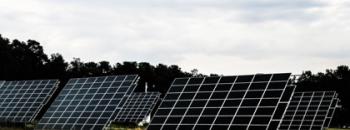
Cost-Effective Integration of Second-life EV Batteries with Solar PV Systems for Commercial Buildings
Developing battery management system technologies, algorithms, and operation strategies to extend the second-life of EV batteries.

San Diego State University Foundation
Recipient
San Diego, CA
Recipient Location
39th
Senate District
79th
Assembly District
$2,056,221
Amount Spent
Active
Project Status
Project Update
San Diego State University Research Foundation (SDSURF) has deployed its energy storage system at the UCSD Warehouse; it has a nominal capacity of 372 kWh and uses second-life Nissan Leaf battery packs. The demonstration site is used to validate the ability of second-life electric vehicle (EV) batteries when paired with a solar photovoltaic (PV) system, to provide building resiliency and load-shifting services for small- and medium-sized commercial buildings. The site has been in operation since May 2024 and will last until the end of 2026. SDSURF is also working with Oberlin Inc. to install a new energy storage system with 550 kWh capacity, using the energy management system (EMS) developed by SDSURF, to compare the performance of new and second-life EV batteries. Site construction is complete and the system is pending approval of the City of San Diego to begin operation in Spring 2026.
The Issue
California has the goal of 5 million zero-emission vehicles on the road by 2030, meaning that over the next few decades, a large number of used electric vehicle (EV) batteries will need to be recycled. EV batteries typically retire from their first life when their performance decreases to 70-80 percent of their initial capacity. Our research has demonstrated that second-life batteries paired with solar photovoltaics (PV) and demand response could be economical. Moreover, lower-cost second-life EV batteries may enable small businesses with buildings to install PV-battery systems and may lower energy costs for California ratepayers.
Project Innovation
This project pairs second-life EV batteries with a solar PV system and develops key technologies to quickly identify battery health and optimize usage. These key technologies include developing control and operation algorithms to enable 1) proactive maintenance, 2) predictive thermal management, 3) active cell balancing, and 4) dynamic demand response management. Together, these technological advancements extend the life of the repurposed EV batteries and lower the cost to California ratepayers. The goal is to ensure that second-life EV batteries will last for a minimum of 10 years as part of a grid storage application with a degradation rate of 3% or less annually.
Project Goals
Characterize the Degradation Rate of Second-life EV Battery Cells.
Validate the Second-life EV Battery Paired with Behind-the-Meter Solar PV.
Develop and Demonstrate Technologies, Algorithms, and Operation Strategies as it relates to second-life EV batteries.
Project Benefits
This project evaluates whether second-life EV batteries can become a cost-effective option for behind-the-meter energy storage systems. By improving battery management technologies and demonstrating operational performance, the project helps determine whether repurposed EV batteries can provide reliable grid services such as load shifting and renewable enegy integration. If commercially viable, second-life batteries could expand the supply of low-cost battery storage deployed on the grid. Increasing the availability of distributed energy storage can improve grid flexibility, support higher levels of renewable generation, and reduce overall system costs for Californa electricity ratepayers. In addition, repurposing EV batteries can extend the useful life of critical battery materials, reducing the need for additional resource extraction and lowering lifecycle environmental impacts.

Consumer Appeal
Consumer Appeal
Second-life batteries may provide a lower-cost pathway for commercial customers to adopt energy storage paired with solar PV systems.

Affordability
Affordability
By improving the commercial viability of second-life EV batteries, this project could increase the supply of low-cost distributed energy storage systems. Greater deployment of cost-effective battery storage can reduce grid system costs, improve load management, and ultimately benefit California electricity ratepayers.

Economic Development
Economic Development
Developing technologies and operational strategies for second-life battery systems can support emerging industries focused on battery reuse, refurbishment, and energy storage system integration.

Environmental Sustainability
Environmental Sustainability
Extending the useful life of EV batteries reduces the demand for new battery materials and associated mining activities, lowering lifecycle environmental impacts while supporting California’s clean energy transition.

Reliability
Reliability
This project demonstrates how second-life EV batteries paired with solar PV can provide load shifting, backup power, and distributed grid support services, contributing to a more flexible and resilient electricity system.
Key Project Members

Chris Mi
Distinguished Professor
San Diego State University
Subrecipients
Tech Partner

The Regents of the University of California on behalf of the Riverside campus
Tech Partner
The Regents of California, San Diego
Smartville, Inc.
Protection Design and Consulting
Oberlin Realty LLC
MEOS, Inc
Rizza Engineering
Match Partners
The Regents of the University of California on behalf of the Riverside campus
The Regents of California, San Diego
San Diego State University