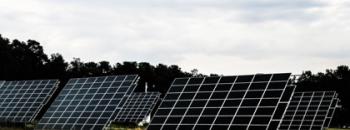
Camp Parks Army Microgrid - A Blueprint for Nested, Modular Design
Microgrid installations at military bases are a topic of growing interest at the U.S. Department of Defense.


Lawrence Berkeley National Laboratory
Recipient
Berkeley, CA
Recipient Location
9th
Senate District
14th
Assembly District
$4,729,032
Amount Spent
Active
Project Status
Project Update
Installation of the electrical infrastructure is largely complete, including the internal wiring of power factor correction units and the local microgrid controller, as well as the installation of the ground loop around the perimeter of the Integrated Resilient Node (IRN) #1 e-house and battery energy storage system enclosure. A step-by-step energization and commissioning procedure has been completed, and system commissioning is planned for the first quarter of 2026. Grid-connected and islanded operation scenarios will be demonstrated and evaluated for the remainder of the project period.
The Issue
Military bases must ensure uninterrupted energy access, optimal use of energy resources, and build energy security and resilience to reduce vulnerability and risks. To maximize the use of bases, the military is moving toward multiple zoning with mixed military and commercial tenancy and is collaborating with local communities to implement innovative, sustainable technology and business solutions. Enabling smaller microgrids nested within a larger microgrid would give the military the greatest flexibility and resilience.
Project Innovation
The Parks Reserve Forces Training Area (PRFTA) microgrid project will deliver a permanent, modular, nested design that maximizes renewable energy and is inherently secure, expandable, economically viable, and efficient. The project will deliver a blueprint for incorporating multiple distributed energy resources (DERs), a vendor-neutral microgrid control system, and a resilient nodal building-block approach that supports grid-within-grid nesting. The project will also develop engineering guidelines and an easy-to-adapt "how-to" case tool for accelerated adoption and commercialization.
Project Goals
Project Benefits
This project will demonstrate how a nested microgrid can improve resilience and grid flexibility in a fast-growing suburban area. If replicated at California military bases and other large campuses, the design could support increased integration of renewables, load shifting, reductions in peak demand, increased resilience, and other grid benefits. Once in place, the project will allow the site to generate and store much of its own power, reducing the amount of electricity PG&E will need to procure and lowering demand during peak periods. It will also support delaying or avoiding distribution level upgrades at the local substation.

Affordability
This project is expected to reduce electricity procurement by approximately 3,100 megawatt-hours (MWh) per year, generating roughly $600,000 in annual savings for PRFTA. In addition, installing 2 MW PV paired with a 2 MW/4 MWh energy storage system can reduce the need for utility investments in generation, back-up capacity, and local distribution upgrades.

Environmental Sustainability
The project will reduce GHG emissions by ~1,300 tons and the use of diesel generators as backup power.

Energy Security
It would ensure energy quality and reliability, and continuity of critical operations in islanded mode with renewable assets for the requisite 14 days.
Key Project Members

Doug Black
Romeo Columbara
Namit Singh
Jarrod Ross
Alex Hui
Subrecipients

Pacific Northwest National Laboratory
Cal Poly State University, San Luis Obispo
Schneider Electric USA Inc.
Customized Energy Solutions
Microgrid Labs, Inc.
Spectrum Energy Development, Inc.
Match Partners
Customized Energy Solutions
U.S. Army