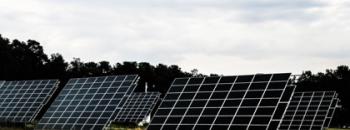
Berkeley Energy Assurance Transformation (BEAT) Project
The BEAT project will advance clean energy microgrid communities in a dense urban context
Office of Energy and Sustainable Development, City of Berkeley
Recipient
Berkeley, CA
Recipient Location
7th
Senate District
14th
Assembly District
$1,403,559
Amount Spent
Completed
Project Status
Project Result
This project concluded in June 2018. The recipient aimed to create a shovel-ready design for an islandable, clean energy microgrid community by integrating buildings located throughout downtown Berkeley. However, challenges with crossing the public right-of-way on existing distribution lines between these non-adjacent buildings, as well as the high-cost for new distribution lines and a lack of incentives through PG&E's current tariff structure made the original design cost-prohibitive. The project team changed directions and opted to create designs for separate solar + storage systems, coupled with energy efficiency measures and smart building operation at three locations. The design allows the city to meet its resiliency goals, reduce utility energy consumption by 36-43 percent, and reduce its existing reliance on backup diesel generators during power outages, by up to 40 percent.
The Issue
Cities are at the forefront of the sustainability and resilience movement, and are looking for multi-benefit solutions that enhance the safety and environmental quality of their communities. Multi-facility microgrids can help communities reduce their carbon footprint by offering clean, localized generation and increased resiliency during power outages. However, they are still at an early stage of development, and most existing projects are located on private campuses, or are located in remote settings at the end of a utility distribution line.
Project Innovation
The BEAT project focused on designing a clean energy microgrid for the public good that could be integrated into the existing fabric of a dense urban city. The project analyzed the feasibility of designing a multi-building, urban microgrid that uses solar and energy storage to share power between existing buildings to better regulate day-to-day energy supply. Additionally, in the case of a power outage, the microgrid would be able to "island" itself from the grid and provide clean back-up power for critical buildings. The BEAT team conducted a series of coordinated regulatory, technical and financial analyses to determine site feasibility, optimal configurations, operation criteria, financing strategies, and lessons learned.[br/][br/]The financing and regulatory models provide pathways and recommendations for dense urban communities looking to develop microgrids that cross the public right-of-way. Using this analysis, other microgrid projects will be able to evaluate the benefits and challenges of urban microgrids and accelerate the non-technical planning, modeling, and financing options for microgrid and/or solar + storage projects.
Project Benefits
Senate Bill 350 (2015) set a 50 percent renewable energy standard and a goal of doubling energy efficiency savings by 2030. Local governments are playing a critical role in achieving that goal by helping facilitate community-scale deployment of Integrated Distributed Energy Resources (IDER) such as energy efficiency, onsite renewables, demand response, and electric vehicles. This project is piloting innovative planning, permitting and financing approaches and tools to help improve the business case for IDER adoption at the community-scale.

Affordability
Streamlined planning and permitting, as well as new financial models will lower the time and capital costs associated with Advanced Energy Community (AEC) developments. This will make Advanced Energy Communities more affordable f

Economic Development
Increased AEC deployments can lead to increased demand in clean energy technologies and services resulting in broad economic benefits to the clean energy sector.

Reliability
The project will increase energy reliability by enabling districts in downtown Berkeley to localize power generation and distribution.

Energy Security
Microgrids using renewable energy generation, coupled with storage systems, allows consumers to generate their own energy locally.
Key Project Members

Katie Van Dyke
Subrecipients

Lawrence Berkeley National Laboratory
URS Corporation
Association of Bay Area Governments
Center for Sustainable Energy
Interface Engineering, Inc. dba Interface Engineering, Inc., Consulting Engineers
West Coast Code Consultants Inc.
NHA Advisors, LLC
Match Partners
URS Corporation
Center for Sustainable Energy
Office of Energy and Sustainable Development, City of Berkeley
West Coast Code Consultants Inc.
NHA Advisors, LLC
Bay Area Regional Energy Network