Affordable Space Conditioning and Domestic Hot Water Systems with Low Emissions and High Performance
This project will develop, test, and demonstrate a novel combined water heating and space cooling & heating system.
Franklin Energy Services, LLC
Recipient
Oakland, CA
Recipient Location
7th
Senate District
18th
Assembly District
$1,013,237
Amount Spent
Active
Project Status
Project Update
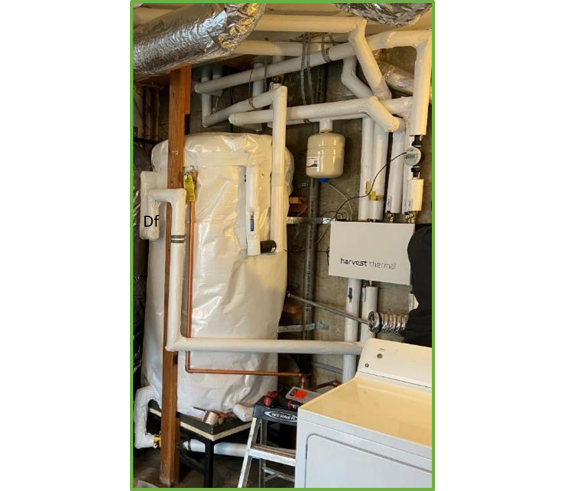
In 2025, The project made signficant progress in equipment installation at the identified project sites. The team worked to gain approval for for the necessary permits while also coordinating with homeowners, landlords, and contractors. The team, primarily AEA and Harvest worked with 21 units through design and permit process. Installations were completed for 6 units, at a multifamily project site in San Jose and 3 units at a multifamily site and 3 individual units Oakland. The final unit will be installed in February 2026 in Oakland, for a total of 13 installations.
Furthermore, Harvest has ensured that engineering development was completed on schedule and the team has Harvest POD systems in finished goods inventory ready for deployment as the installations progressed last year.
The Issue
Heating, hot water, and cooling represent the top three energy uses in California households. While air conditioning GHG emissions will go down as renewable generation increases, reducing site emissions from natural gas space and water heating will require fuel substitution. Electric heating, ventilation, and air conditioning solutions will help meet the state's climate goals, but the options currently available are expensive. They often require the use of separate heat pumps for heating and hot water, and typical operation patterns overlap with grid peak times, resulting in higher customer bills, higher grid operation costs, higher GHG and criteria pollutant emissions.
Project Innovation
This project will develop, test, and demonstrate a combined electric space conditioning and hot water system that incorporates built-in load shifting and will deliver clean, affordable space conditioning and domestic hot water to existing and new homes. The integrated pod will be installed in residential buildings to evaluate cost-effectiveness, load flexibility, and GHG emissions reductions.
Project Goals
Project Benefits
This project will develop, test, and demonstrate a novel combined water‑heating and space‑heating system designed to lower costs through higher efficiency and load‑shifting capabilities. It will improve environmental and public health by reducing onsite emissions through electrification, using lower‑GWP refrigerants, and shifting grid demand to off‑peak hours. The system’s advanced control unit will enhance grid reliability by automating responses to price and demand‑response signals, reducing the need for manual occupant adjustments. Safety is also improved by reducing onsite combustion, potentially eliminating gas connections and lowering indoor air pollutants. In addition to CEC‑defined tasks, the project deliverables include technical SOW activities that support effective deployment and installation of cost‑effective, low‑carbon heating systems in residential homes.

Affordability
Its higher efficiency and load shifting capabilities can reduce energy consumption and bills.

Reliability
The control unit will provide greater grid system reliability for optimized operation by automating response to price or demand response signals rather than relying on occupants to manually adjust controls or behavior.

Environmental Sustainability
Reduced onsite emissions through electrification of heating and reduction in GWP of refrigerant. Reduced grid emissions through load shifting to off peak hours.

Safety
Reduced onsite combustion, may include eliminating gas connection or reducing indoor air pollutants.
Key Project Members

John Shipman
John Shipman
Subrecipients

Association for Energy Affordability
Harvest Thermal, Inc
Kohlex, LLC
RFI Soft, Inc.
POEIO Enterprises Inc.
Match Partners
Franklin Energy Services, LLC
Harvest Thermal, Inc