Advanced VGI Control to Maximize Battery Life and Use of Second-Life Batteries to Increase Grid Service and Renewable Power Penetration
Demonstrating a cost-effective, scalable approach to deploying second-life electric vehicle batteries.


Lawrence Berkeley National Laboratory
Recipient
Berkeley, CA
Recipient Location
9th
Senate District
14th
Assembly District
$2,045,000
Amount Spent
Active
Project Status
Project Update
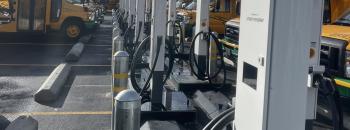
In 2025, the location of the demonstration site was changed from the Los Angeles Air Force Base (LAAFB) to Parks Reserve Forces Training Area (PRFTA) in Dublin, CA. LAAFB stated that they did not intend to move forward with powering new EV charging stations including the 13 level 2 single port charging stations procured for the project because they do not have, and are not going to receive or order, any fleet electric vehicles for the duration of the current federal administration. The charging stations will be moved to PRFTA, which will share existing and additional EV charging station data and support implementation of research activities focused on shared workplace and fleet EV charging behavior and cost recovery. The project team also developed a survey to determine current and future EV ownership and on-site charging behavior of PRFTA staff.
The Issue
Shifting plug-in electric vehicle (PEV) charging from overnight home charging to daytime workplace charging better aligns charging load with solar power generation. A major challenge military bases face in promoting employee PEV adoption through workplace charging is meeting government cost recovery requirements. Military bases have attempted to deploy commercial off-the-shelf products (hardware and software) to address charging at federal facilities, but demand is often not sufficient to support the ongoing cost of software, operations, and maintenance. Further, these products lack capabilities to locally curtail charging in response to demand and meet current security requirements.
Project Innovation
This project will develop a software solution to monitor the cost of electricity delivered to personally owned and fleet electric vehicles using shared chargers, ensure cost recovery requirements for military bases and other government workplaces are met, and meet government security requirements. Charging data will be collected to inform advancement of similar solutions for other military bases and government workplaces across California. Survey data will be collected to gauge workplace charging participation, charging preferences, and price sensitivity.
Project Goals
Project Benefits
Recover personally owned electric vehicle workplace charging costs at military bases and other government workplaces., Manage charging to maximize service to drivers and minimize additions to monthly peak demand charges.

Reliability
The managed charging system will be able to control charging of all personally owned and fleet workplace electric vehicles and ensure distribution system health is not compromised.

Economic Development
Personally owned electric vehicle drivers that utilize charging stations at military bases and other government workplaces will be appropriately compensated with the use of this project's developed software solution that meets government requirements.

Environmental Sustainability
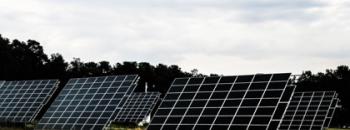
Increasing utilization of workplace charging can help shift EV charging loads to daytime hours that align with renewable generation.
Key Project Members

Douglas Black
Christoph Gehbauer
Subrecipients

Kisensum
TechFlow, Inc.
Match Partners
Lawrence Berkeley National Laboratory