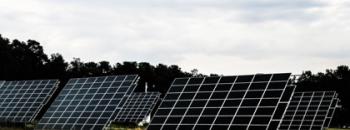
21st Century Truck Stop: 1st MD/HD eTruckStop in California

WattEV, Inc.
Recipient
Long Beach, CA
Recipient Location
33rd
Senate District
69th
Assembly District
$3,504,650
Amount Spent
Active
Project Status
Project Update
The project was commissioned in April 2025with all DER elements, including battery energy storage system (BESS), Inverters, Solar Array, energy management system (EMS) as well as (15) 240KW DC fast chargers (Combined Charging System chargers) and (3) 1.2MW DC fast chargers (Megawatt Charging System chargers) .
The Issue
Medium and heavy-duty (MDHD) vehicle electrification is beginning to accelerate but lacks the necessary infrastructure to support widespread adoption. Currently, adoption of MDHD plug-in electric vehicles (PEVs) has been limited to short-range and return-to-base operations. To increase adoption to longer-range vehicles and ensure equity among fleets that lack the physical and financial resources for onsite charging infrastructure, public charging options are needed along major corridors. Since fueling is the largest component of a fleet’s operational cost, certainty around fueling is essential for a fleet to remain successful. These problems have not been solved in part due to the infant nature of the market but also because of the significant investment required to demonstrate a scalable DER package specifically designed to provide low-cost energy to MDHD PEV.
Project Innovation
The purpose of this Agreement is to fund the design, construction, and commissioning of a modular distributed energy resource (DER) package composed of solar, battery storage, and an AC/ DC distribution control system at a public access electric truck stop. The scalable DER package provides reliable low-cost renewable energy for a dedicated fleet of 10 to 30 Class 8 battery electric trucks as well as support broader public access MDHD PEV charging for fleets in a burgeoning trade corridor. By increasing the availability of public charging, this stimulates MDHD PEV adoption and equity in adoption of these vehicles for the commercial sector.
Project Goals
Project Benefits
This project demonstrates one of the first public-access electric truck stops in California designed specifically for medium- and heavy-duty electric trucks. By integrating high-power charging with onsite solar generation, battery energy storage, and advanced energy management, the project shows how distributed energy resources can support large-scale truck electrification while reducing grid infrastructure requirements and energy costs.
The project evaluates the operational performance and economic benefits of combining renewable energy and energy storage with truck charging infrastructure in a major freight corridor. If successful, this model could accelerate the deployment of public charging infrastructure needed to support zero-emission freight transportation. Expanding access to cost-effective electric truck charging can reduce diesel emissions, improve air quality in freight corridors and nearby communities, and support California’s clean transportation and climate goals while delivering long-term benefits to electricity ratepayers.

Consumer Appeal
The ability to offer low-cost renewable energy to a dedicated fleet of electric trucks and broader public access MDHD PEV charging can potentially appeal to environmentally conscious consumers looking for sustainable transportation options.

Affordability
The levelized cost of energy (LCOE) has been calculated as $0.238/kWh using the unmanaged charging with no DERs, and after applying charging management and DERs, the LCOE reduces to $0.145/kWh, which is a $0.094/kWh improvement over the baseline case.

Economic Development
The project stimulated economic development by creating new jobs related to the design, construction, and commissioning of the DER package and associated infrastructure. In addition, it promotes the development of local renewable energy resources, leading to increased economic activity and investment in the area.

Environmental Sustainability
The project already achieved significant emissions reductions through both its dedicated fleet and public charging, since the beginning of operations in April 2025.

Reliability
The site DER depends on a self-generation strategy without any grid interconnection. The onsite solar deployment of 5.2MWdc with 3.6MVA inverter along with 2.75MWhr/1.2MVA battery energy storage system (BESS) is used to create an islanded/microgrid operation.

Safety
By testing the Li-ion EV batteries and promoting off-grid resiliency, the project can potentially increase safety by ensuring that the fleets have access to a reliable and uninterrupted power supply in case of power outages and minimizing the risk of fire

Energy Security
An Energy Management System (EMS) is used to achieve automatic energy flow control, ensuring that the virtual grid stays active after initial start-up.